
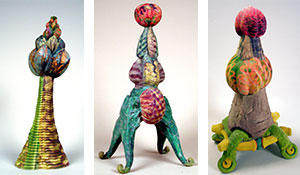
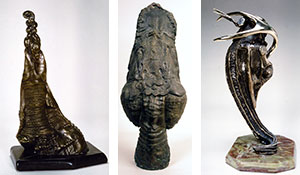
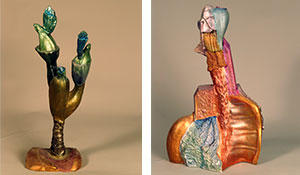
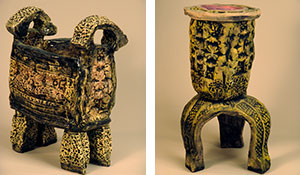
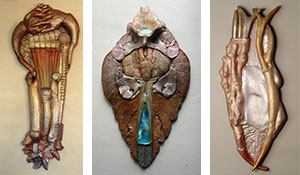
There will be a mini-retrospective of Andrew’s work at the at the Mercury20 Gallery in Oakland opening on Friday November 5th.
Sculpture in wood, bronze, plastic, paper, mixed media, and 3d prints
Nov. 5 – Nov 27, 2010
Opening reception Friday Nov. 5, 6-9pm
Wine and Snacks will be served.
Mercury 20 Gallery
475 25th St. @ Telegraph
Oakland CA 94612
mercurytwenty.com/current/current.html
Hours-Th,Fr,Sat 12-6, plus by appointment
510-701-4620
Mercury Twenty Gallery, relocated to a spacious, light-filled new location on 25th Street, in Oakland’s vibrant Art Murmur district, is proud to announce the first in a number of exhibitions prepared by visiting curators. For November, 2010, DeWitt Cheng, who writes for Art Ltd., Artillery, Sculpture, VisualArtSource.com, ArtBusiness.com, as well as the local weekly newspaper, The East Bay Express, and teaches at UC Berkeley Extension, has selected Oakland sculptor Andrew Werby, some of whose “Juxtamorphic” sculptures will be exhibited in public here for the first time. Admirers of fantasy and high tech alike will find them beautiful, strange and enthralling. The show runs Nov.5- Nov.27, 2010 with an
Opening reception Friday Nov. 5, 6-9pm. On Saturday Nov. 6, 2 pm there will be a talk by the artist on the evolution of his work from analog to digital sculpture
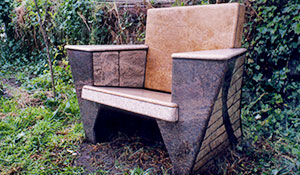
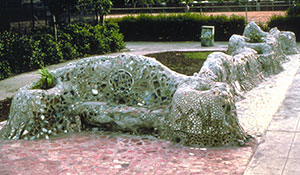
Werby, best known locally for the Berkeley Potter’s Wall in Willard Park and his reliefs at the Berkeley Bowl Marketplace, studied art and design at UC Berkeley. His work combines traditional techniques of carving and casting in plaster, wood and bronze with three-dimensional digital scanning, modeling and fabrication. As the founder of United Artworks (ComputerSculpture.com) http://www.computersculpture.com/ , a discount retail distributor for digital sculpture programs and equipment (including the futuristic-looking triple-lensed 3D scanning camera), he is active in spreading information about the new technology, which he employs it in his own works:
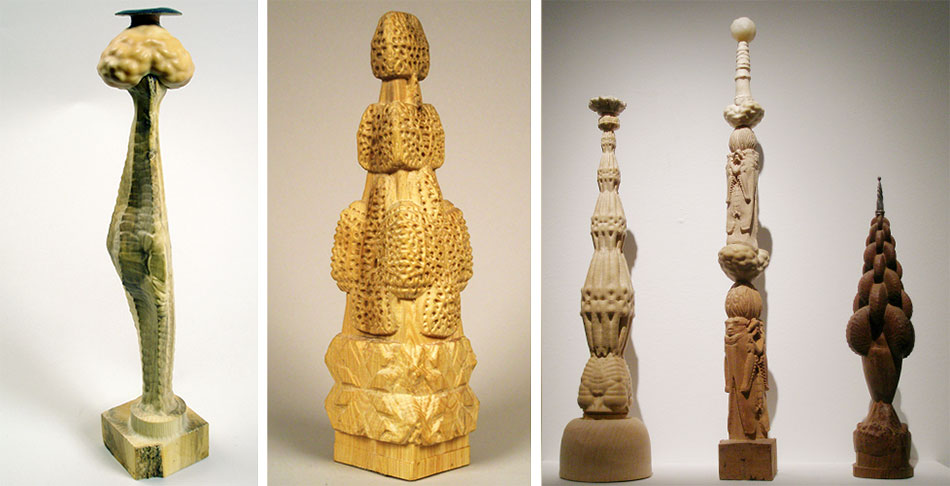
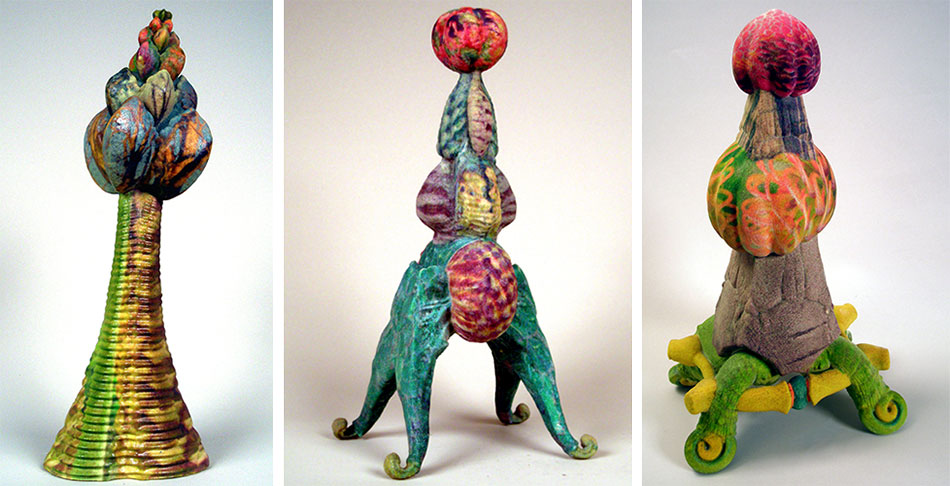
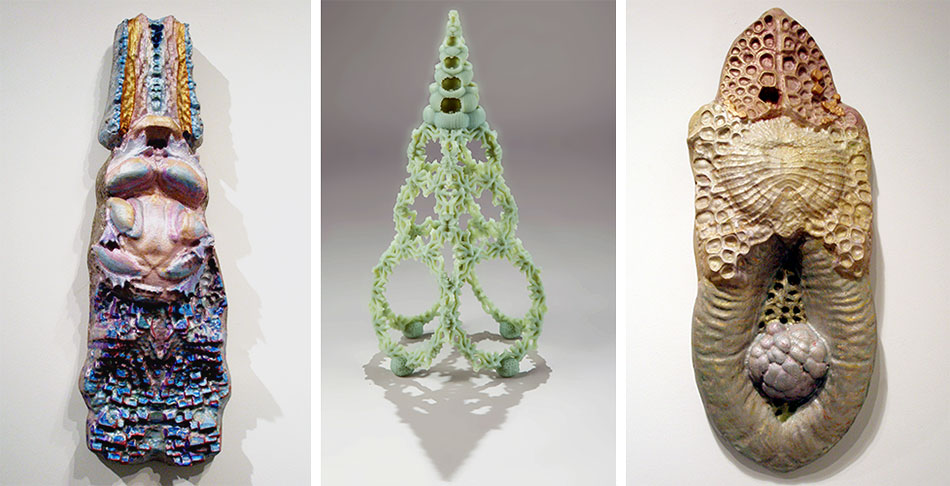
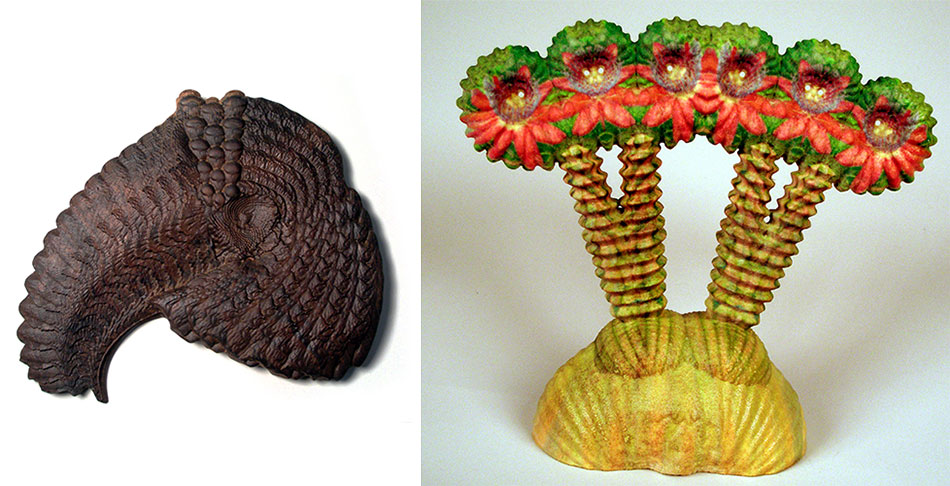
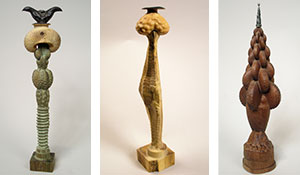
As a sculptor, Werby’s work has primarily involved the use of natural forms and textures in assemblage. You can see some of the pieces he has done in this “juxtamorphic” style at http://www.UnitedArtworks.com. > The work on that site was done using traditional techniques: molding and casting the original forms, assembly and recasting in various materials. Since becoming involved with computers, 3-D scanners, and CNC milling machines, Werby states”I’ve stuck with this basic idea, but have scanned the source objects instead of casting them, have assembled the objects or pieces of them in 3-D modeling programs, and made physical parts from the digital models using CAM software, computer-controlled milling machines, and color-capable 3-d printers. Sometimes these parts are incorporated in a piece directly, or they may be used as stamps or molds”.
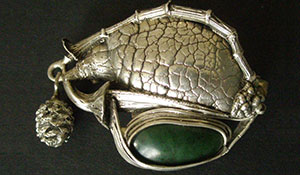
The nearly fifty works in this show will present a varied sampling of Werby’s Juxtamorphs, analog and digital “collage” sculptures that organically combine the shapes, textures and colors of natural materials as disparate as trilobite shells and sea-fan “leaves”; mangos and sunflowers; allosaurus claws, duckbill dinosaur, mastodon and cave-bear teeth; American mountain ranges and the craterscapes of Jupiter’s moons
###